

Wet Specimen Care and Prservation
Wet specimens are delicate, beautiful and quietly alive in their own way. Care for them is a blend in their own way. Caring for them is a blend of science, patience, and reverence-a blend that protects the integrity of the creature while preserving the clarity and elegance of the display.
This guide will help you maintain your specimens with confidence, wither you're a collector, a beginner, or someone exploring the macabre craft for the first time.
Long-Term care basics
Long-Term care basics
How to Care for Your Wet Specimen
Wet specimens require gentle, consistent care to remain clear and stable.
Keep your specimen beautiful by following these principles:
- Store in low light- Direct sunlight can fade pigments and warm the jar, causing evaporation.
- Use glass jars only- Plastic can haze, warp, or leach chemicals into the solution.
- Avoid Temperature Swings- Keep specimens in cool, stable environments-shelves, cabinets, shadowed corners.
- Minimize vibration- Constant movement can disturb tissues and cause cloudiness.
- Check fluid levels every few months- Top off with 70% isopropyl alcohol if needed.
Troubleshooting guide
Cloudiness
Cloudiness usually means:
- Residual fats or proteins
- Temperature fluctuations
- Contaminants introduced during handling
Fix
Replace the solution with fresh 70% isopropyl alcohol. If cloudiness persists, move to 80% for one cycle, then back to 70.
Discoloration
Don't worry! This happens
Yellowing or browning can occur due to:
- Natural tissue oils
- Light exposure
- Time
Fix:
Replace solution and move specimen to another location.
Evaporation
- If the fluid level drops:
- Top off with the alcohol
- Check the lid seal
- Consider changing the jar if the lid is leaking.
Leaks
- If you notice moisture around the lid:
- Replace the lid
- Add a thin layer of Teflon tape around the threads
- Move to a jar with a rubber gasket
How wet specimens are made
1. Fixation
The specimen is injected and then place in a fixative (formalin) to stabilize the tissue and prevent decay (the time spent in this fixative depends on the size of the specimen). The specimen is posed in this step because the specimen will get hard and stay in that position.
2. rinsing
After fixation, the specimen is rinsed thoroughly to remove residual chemicals.
3. alcohol
Place the specimen in the 70% isopropyl alcohol for a couple days to a week.
4. Final display solution
Rinse the specimen and place the specimen in the jar. Fill the jar with fresh 70% isopropyl alcohol, slowly to prevent air bubbles. Seal the jar, and the specimen is ready.
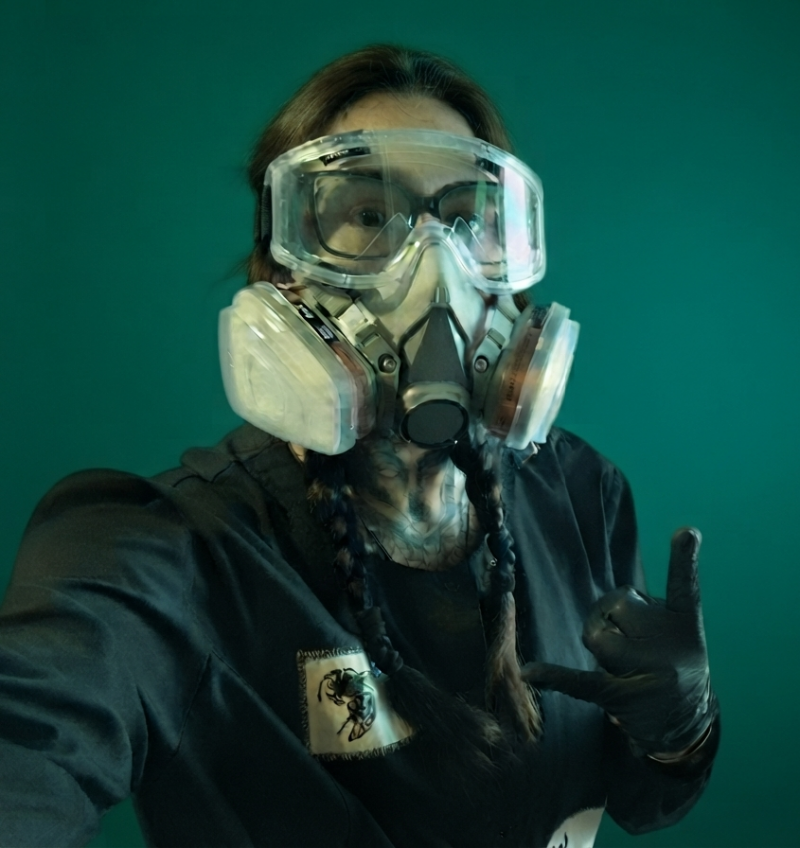
When working with the chemicals needed to preserve and provide the best quality specimens, it is crucial to have the correct PPE.
Do you have a Bones and Blooms specimen?
If you specimen was created here at Bones and Blooms, you can trust that it was prepared with museum-grade care and a deep sense of reverence. I use only high-quality formalin and precisely graded isopropyl alcohol, and each piece is fixed, rinsed, and sealed with the same attention I give my own collection.
Your specimen is more than a preserved creature- it's a small monument to the beauty of decay, crafted with intention so it can endure in its quiet, haunting elegance for years to come.
Frequently asked questions
At Bones and Blooms, I understand that wet specimens often spark curiosity-especially for those stepping int this strange, beautiful world for the first time. This craft carries both science and soul, and it's natural to have questions as you learn how to care for these delicate, preserved creatures. You'll find answers to the questions that pop up frequently. If something about your specimen feels uncertain — a shift in clarity, a question about care, or simply curiosity about the process — you’re always welcome to reach out.
You can contact me anytime or follow along on Instagram for daily glimpses into the studio, preservation tips, and the quiet magic behind each piece.
A final note
Wet specimens are small monuments to what once lived — delicate echoes suspended in time. Caring for them is an act of respect, a way of honoring the quiet beauty found in decay. Whether you’re a collector, a creator, or simply someone drawn to the strange and the lovely, I hope this guide helps you feel more connected to your piece and the craft behind it.
If you ever need help, reassurance, or guidance, you’re never alone in this. Bones & Blooms is here to support your journey into the macabre.
Create Your Own Website With Webador